
 EN
 English
 Español
 Français
 Deutsch
 Nederlands


- Type:
- Industry News
- Date:
- 2026-11-13

Industry News
What Is a Pet Slow Feeder and How Does It Help Pets
Mealtime shapes a pet's day more than many owners realise. It is a daily routine, an opportunity for engagement, and a chance to build steady eating habits. A Pet Slow Feeder offers a practical way to make feeding more interactive by encouraging smaller bites and more time spent reaching the food. A Pet Slow Feeder Bowl has raised patterns, grooves, or maze-like sections that keep food from sitting in one open pile, and a Slow Feeding Pet Bowl can suit both dogs that finish dinner within moments and cats that enjoy exploring different textures.
What a Slow Feeder Does
A slow feeder is a bowl whose interior contains ridges, channels, or other raised patterns that divide the food into small spaces. Instead of taking large mouthfuls from an open dish, a pet has to move around the design to collect each portion. The food stays the same. Only the way the pet reaches it changes.
Depending on the pattern, an animal may need to work its tongue around raised sections, pick food from narrow grooves, explore different parts of the bowl, and take smaller mouthfuls instead of eating in one continuous rush. The aim is food that is accessible without being immediately available all at once. A simple ridged bowl suits a pet new to slow feeding, while a more detailed maze offers extra engagement for an animal that has settled into the routine.
| Feature | Regular Bowl | Slow Feeder Bowl |
|---|---|---|
| Interior | Open and smooth | Grooves, ridges, or maze patterns |
| Food placement | One open area | Spread across sections |
| Eating experience | Direct access | Gradual exploration |
| Engagement | Mainly eating | Eating combined with exploration |
| Suitable use | Everyday feeding | Routines that benefit from slower eating |
Why Some Pets Eat Too Fast
Some pets seem to finish a meal before the food container has been put away. The habit usually has an ordinary cause. Excitement is one, since many animals become highly enthusiastic when they smell dinner. Competition is another. Pets sharing a home may gulp their food because they fear another animal approaching the bowl. Long habit plays a part too, because an animal that has always eaten from an open dish may simply have learned to swallow quickly. Noisy or distracting mealtime surroundings can have the same effect.
Understanding the reason helps an owner decide whether a Pet Slow Feeder is the right tool. If competition is the cause, feeding pets in separate spaces may matter as much as the bowl.
Eating very quickly may contribute to discomfort in some animals, since large mouthfuls can bring extra air into the stomach. Owners sometimes notice regurgitation soon after a meal, mild digestive upset, restlessness afterwards, or food vanishing with hardly any chewing. A slow feeder can change the pace, but it does not treat digestive conditions. Persistent vomiting, difficulty swallowing, or a swollen abdomen need a veterinarian's attention, and in dogs a swollen, tight abdomen can be an emergency.
What a Slow Feeder Can Offer
The raised patterns make it harder to scoop up a large amount at once, so mouthfuls shrink and the meal lasts longer. For a pet that regularly clears its dish in moments, changing the feeding surface can improve the routine without changing the diet. Some pets seem more comfortable when they are not rushing, although responses vary and a bowl should never be presented as a cure.
There is also an enrichment benefit. Companion animals need mental engagement as well as food and exercise, and a Slow Feeding Pet Bowl adds a small problem-solving task to an existing routine. The pet explores sections, adjusts tongue or paw movement, and finds food tucked between ridges. An ordinary meal becomes an activity, with no extra toys or separate play session required. This helps indoor animals in particular, since repetitive routines can become dull.
Owners benefit as well. A structured surface makes it easier to watch how a pet approaches food. You may notice whether it eats from every section, struggles with narrow spaces, loses interest halfway, or tries to chew or flip the bowl. Those observations show whether the current design suits the animal or whether a simpler one would be more comfortable.
Materials and Patterns
Slow feeders come in several materials and interior layouts, and each combination changes texture, stability, cleaning needs, and difficulty.
Maze-Style Bowls
Maze-style bowls have raised walls and winding channels. They suit owners wanting a structured feeding experience, but check the spacing between sections, since narrow gaps can frustrate pets with short noses or broad muzzles.
Silicone Designs
Silicone designs have soft, flexible surfaces with circular, flower-shaped, or patterned grooves, and they are convenient for supervised wet-food feeding. Make sure the material is intended for food contact and follow the maker's cleaning advice.
Plastic Bowls
Plastic bowls are lightweight and available in many patterns. Inspect them regularly for scratches or damage, because food particles collect in worn surfaces, and look for smooth finishes that clean easily.
Stainless Steel and Ceramic Bowls
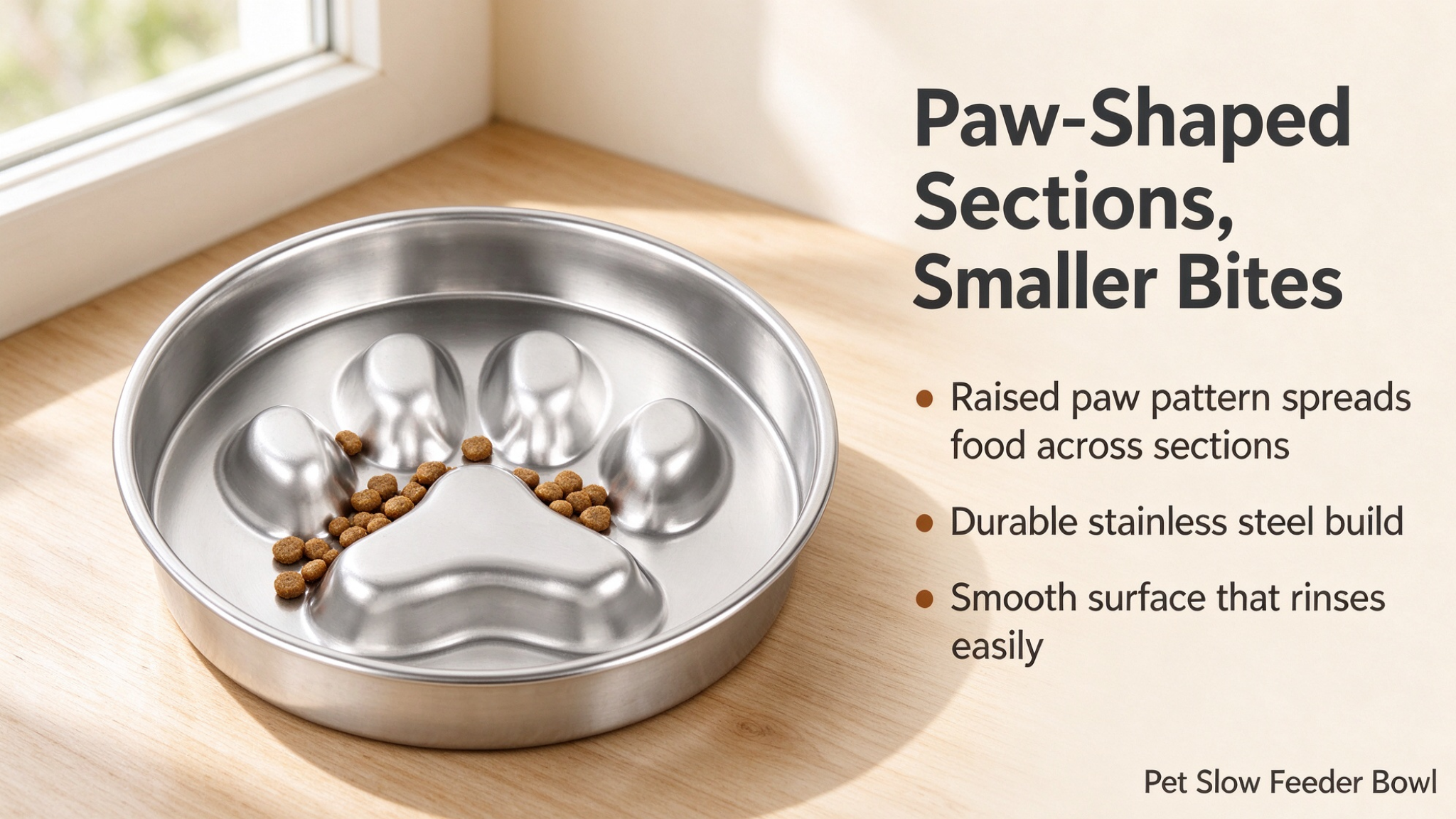
Stainless steel and ceramic offer different qualities. Steel is often chosen for durability and simple cleaning, and ceramic gives a solid feel and a stable base. Check ceramic for chips and cracks, and clean steel according to its instructions.
| Material | Common Traits | What Owners Should Check |
|---|---|---|
| Silicone | Flexible and textured | Food-contact suitability and cleaning |
| Plastic | Lightweight, varied patterns | Scratches, material quality, durability |
| Stainless steel | Durable and easy to maintain | Stable build and smooth surfaces |
| Ceramic | Solid and stable | Chips, cracks, careful handling |
Choosing a Bowl That Fits
A suitable Pet Slow Feeder Bowl matches the animal's size, face shape, and eating habits. A complicated design is not right for every pet, and the aim is gradual eating with food that stays comfortable to reach.
Size is the starting point. A deep bowl can be awkward for a small pet, while a large dog needs a wider surface. Short-nosed breeds often do better with wider spaces between raised sections, and cats usually prefer shallow designs that allow comfortable access. Read the actual dimensions rather than relying on general size labels.
Consider the daily routine. If cleaning time is short, choose a bowl with accessible grooves and a surface that rinses easily. In a home with several pets, durability and resistance to wear matter more. Pattern choice follows the animal. A simple layout works for a beginner, and a more detailed one can reward an animal comfortable with obstacles. Avoid any design that makes food hard to reach or produces frustration.
A non-slip base keeps the bowl in place, which matters for enthusiastic dogs that push dishes across the floor. Finally, think about cleaning. Food residue settles in narrow grooves, so check whether the bowl washes easily by hand, whether its shape lets you reach every section, whether the maker permits dishwasher use, and whether the material copes with regular washing.
Introducing the Bowl
A familiar feeding setup can take time to change. Some pets explore a new bowl at once, while others need a gradual introduction, and a calm transition prevents the bowl from becoming a source of frustration.
Begin with a simple pattern and shallow grooves. Let the pet sniff and investigate before it is used for a full meal. Put a small portion of familiar food in the feeder and watch the response. If the animal seems comfortable, continue. If it struggles, switch to a simpler layout.
Supervise the early meals. Look for frustration, repeated biting at the bowl, or difficulty reaching food. A slow feeder should make mealtime easier to manage, not create stress. Afterwards, remove leftovers and wash the bowl as instructed, paying attention to corners and grooves where moisture and particles gather.
Dogs, Cats, and Extra Care
Both dogs and cats can use slow feeders, though their bodies and preferences differ. For dogs, consider breed and muzzle shape, body size and feeding posture, whether the food is dry or wet, the stability of the bowl, and how easily the dog reaches the food. Dogs that chew feeding equipment should be supervised, and a damaged bowl should be replaced. Cats generally need accessible grooves, a comfortable depth, and a pattern that doesn't interfere with natural eating movements. They are sensitive to changes, so introduce the bowl slowly.
Not every pet needs a slow feeder. Young animals, seniors, and pets with mobility or feeding difficulties call for extra care. If a pet cannot reach its food comfortably, often refuses meals, or shows signs of illness, ask a veterinarian for advice before changing the feeding setup.
A feeding bowl does more than hold food. Whether the choice is a Pet Slow Feeder in maze, silicone, or another style, the right fit depends on the pet's size, eating habits, and comfort, together with how easily the bowl can be cleaned and kept in use.
Related Products
-
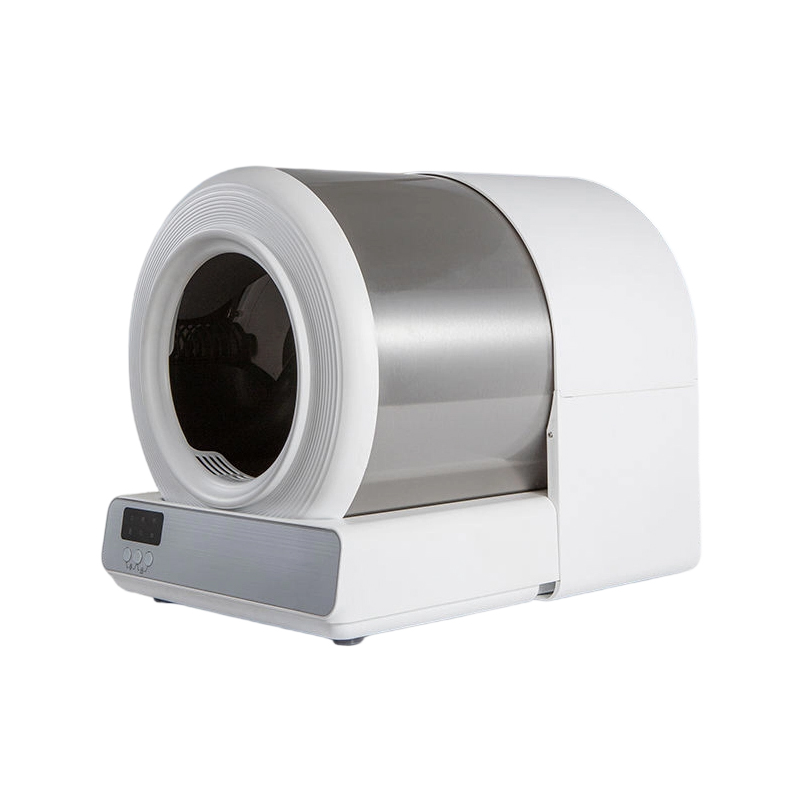
Cat Litter Tray For Multiple Cats Automatic Cat Litter Tray
Cat Litter Tray for Multiple Cats Automatic Cat Litter Tray – Product Features The high-pressure washable, safety-focused design facilitates compr...
View More -
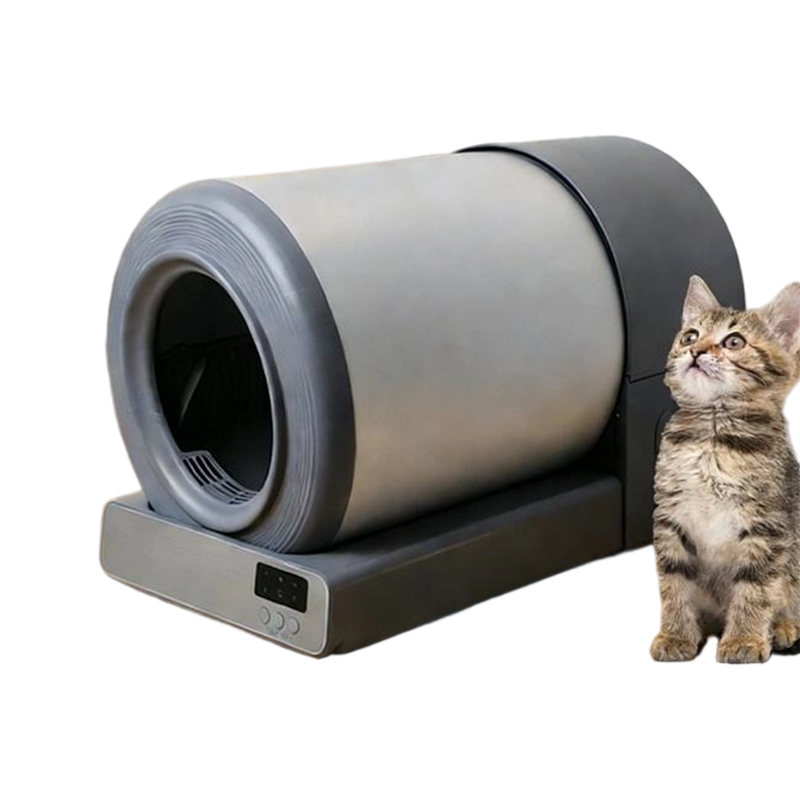
Self-Cleaning Stainless Steel Smart Cat Litter Tray
Self-Cleaning Stainless Steel Smart Cat Litter Tray – Product FeaturesThe preferred choice for non-profit organisations; compatible with open-top bi...
View More -
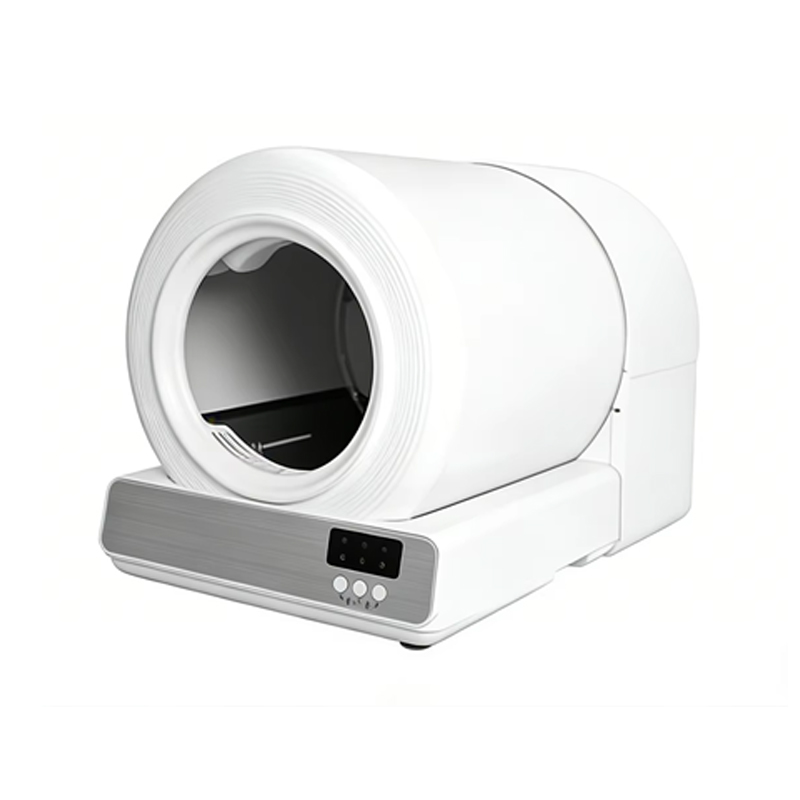
Second-Generation Fully Automatic Cat Litter Tray
Second-Generation Fully Automatic Cat Litter Tray – Product Features With a large 65-litre capacity, it easily accommodates a substantial amount of ...
View More -
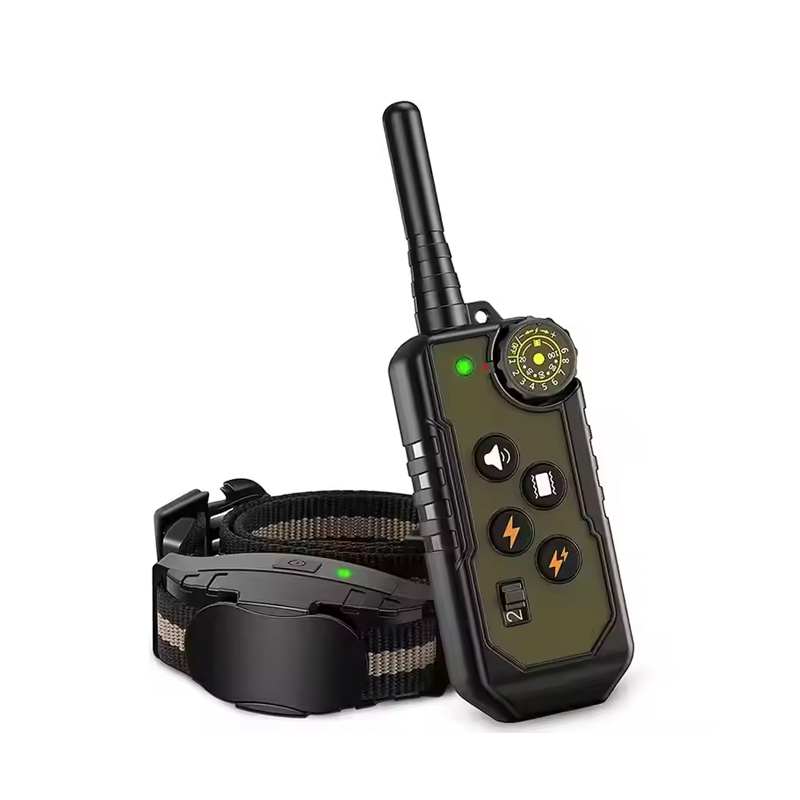
Multi-Mode Easy To Operate Training Shock Collar
The Multi-mode, easy-to-operate training Shock Collar is designed to provide a practical solution for owners seeking a safe and effective way to train...
View More -
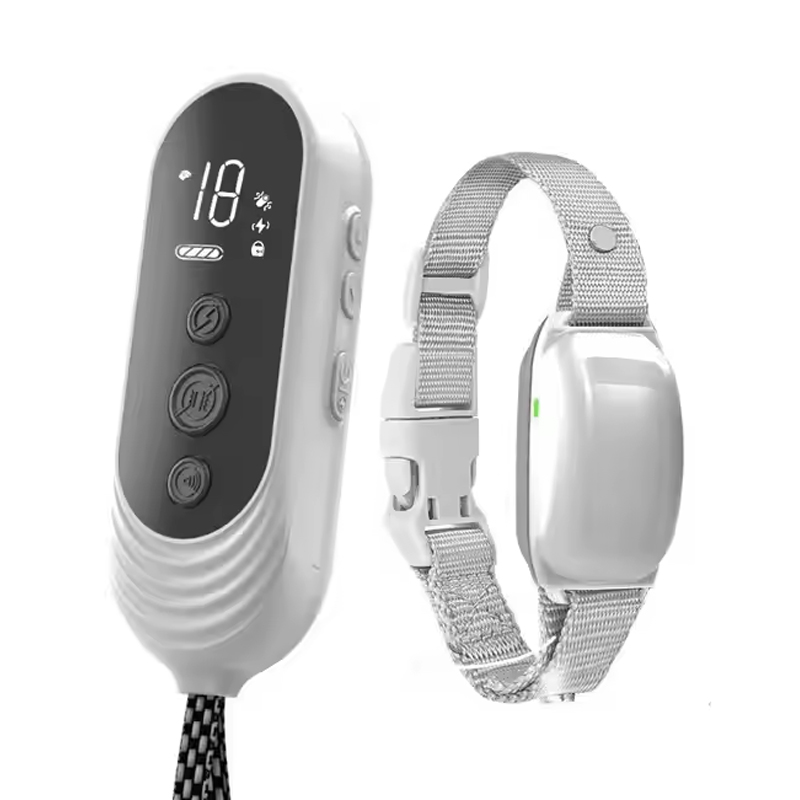
Waterproof Adjustable Polyester Training Shock Collar
The Waterproof Adjustable Polyester Training Shock Collar offers a reliable solution for pet owners seeking a versatile and durable collar to enhance ...
View More -
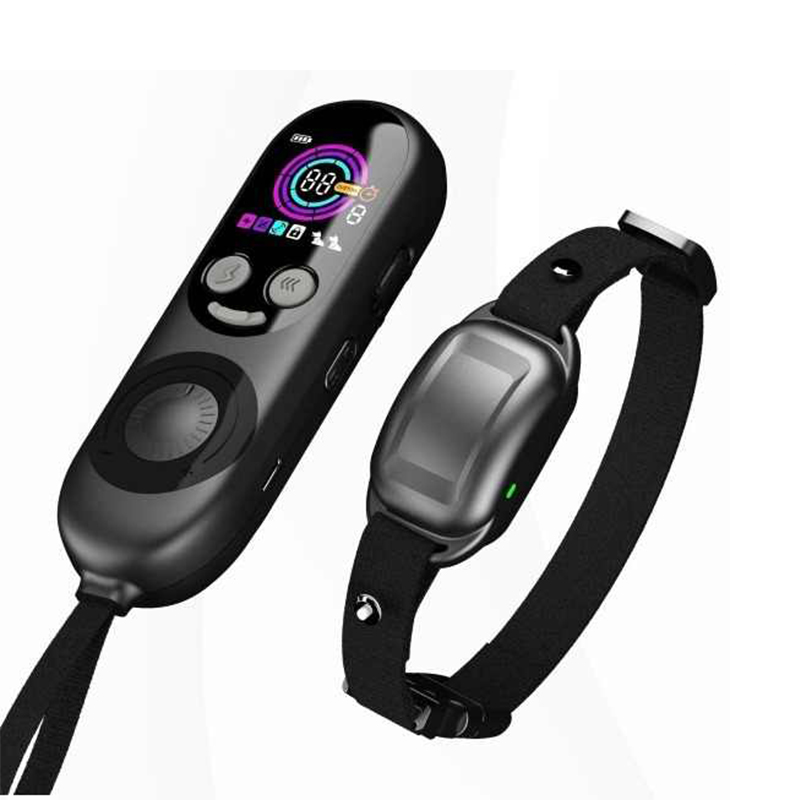
Display Remote Control Training Shock Collar
The Display Remote Control Training Shock Collar is designed to provide pet owners with a reliable and humane solution for training their dogs. Whethe...
View More -
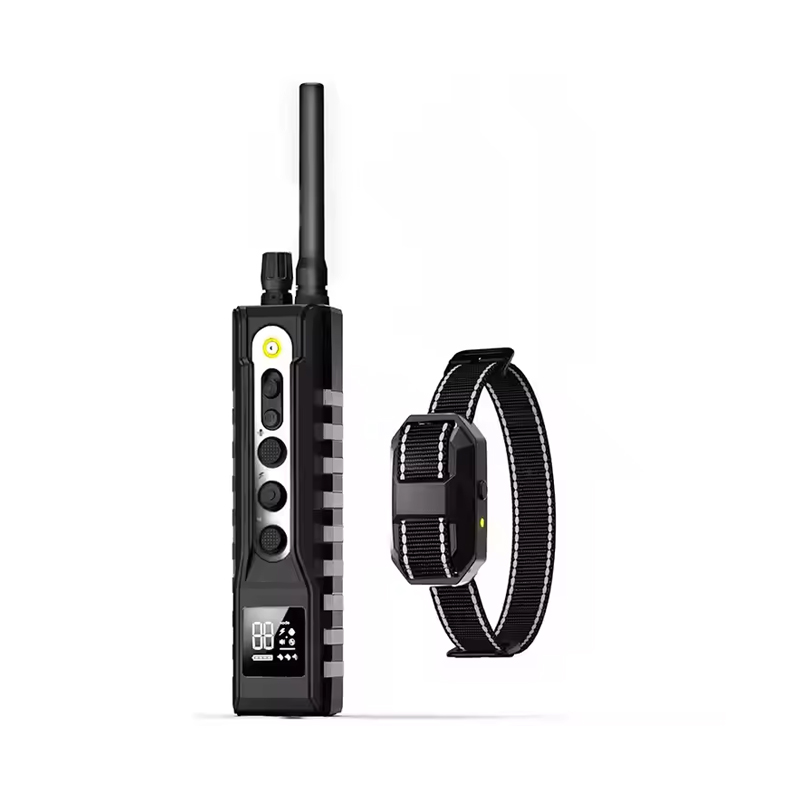
Multi-Function Long Distancetraining Shock Collar
The Multi-function Long Distance Training Shock Collar is a highly versatile tool designed to support your dog’s training across various environment...
View More -
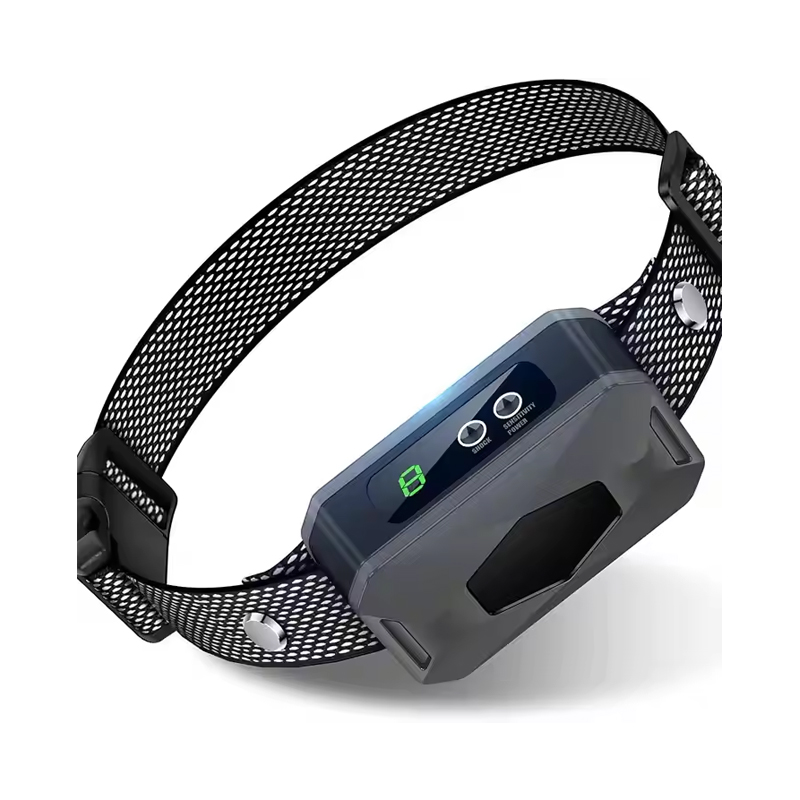
Remote Control Waterproof Training Shock Collar
The Remote Control Waterproof Training Shock Collar is an advanced training tool designed to help pet owners effectively manage their dogs’ behavior...
View More
Pet Products
If you have any questions, please
get in touch with us.
+86-13486854214
E-mail: [email protected]
Address: No. 258, Qingchuan Road, Huzhen Town, Jinyun County, Lishui City, Zhejiang Province
Copyright © Zhejiang Beijing Technology Co., Ltd.

OEM/ODM Smart Pet Care Factory