
 EN
 English
 Español
 Français
 Deutsch
 Nederlands


- Type:
- Industry News
- Date:
- 2026-10-30

Industry News
Can an Animal Hair Dryer Help Pets Feel More Comfortable
Plenty of pets sit through the bath without fuss and then fall apart when the dryer starts. The motor noise, the moving air, and the feeling of being held in place can turn a familiar routine into an unsettling one. An Animal Hair Dryer helps remove moisture from the coat and gives owners control over airflow. How well it works depends on the animal's coat, temperament, and past experiences.
Comfort comes from the whole process, not from the machine alone. Handling, temperature, sound, and patience all shape how a pet responds. The sections below cover what to look for in equipment and how to adjust the routine for different animals.
Why Is Drying More Than Removing Water?
A wet coat feels different to every animal. Some dogs shake over and over or rub against the sofa. Others grow restless when damp fur stays cold against the skin. Thick coats that stay wet underneath can also pick up a musty smell, and the skin beneath may become irritated.
An Animal Hair Dryer can make this stage easier, but the way air reaches the body matters. A strong stream aimed at a sensitive spot makes a pet turn away or try to leave. Gentle, adjustable airflow gives the owner room to respond to small signals before they become big ones.
Heat needs equal care. Warm air can feel pleasant, while strong heat irritates the skin or causes overheating. Follow the manufacturer's instructions and keep the nozzle moving. Touch the coat and skin often, using the back of your hand, to check how the air feels at the pet's level.
Drying can also reduce hard towel rubbing. That helps dogs that dislike rough handling and coats that tangle easily. Brushing should still stay gentle, particularly when fur is knotted or the skin looks tender.
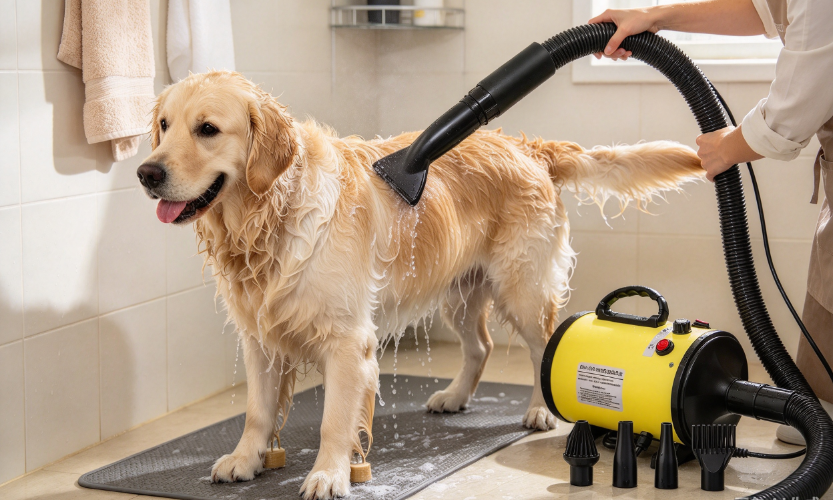
Why Do Some Pets Fear Drying Equipment?
Sound is often the bigger problem. A dog that climbs into the tub willingly may tense up when the motor starts. A cat may hide as soon as it sees the hose, before anything has been switched on.
Reactions vary widely. A bad experience at a grooming salon, a slippery tub floor, and the sense of being restrained can all play a part. Some animals bark or struggle, while others freeze. Stillness does not always mean calm, because an uncomfortable animal can simply go quiet.
A gradual introduction helps:
- Leave the switched-off dryer where the pet can sniff it on its own terms.
- Turn it on at a distance while the pet stays relaxed.
- Bring the airflow closer, starting at a less sensitive area such as the back or shoulder.
- Offer treats, praise, and short breaks between steps.
Keep the room quiet and avoid sudden movements with the hose. If the pet trembles, pants heavily, or keeps trying to escape, pause the session. Forcing an animal through fear tends to make the next bath harder, and the next, harder still.
Which Features Matter When Choosing a Dryer?
Appearance and advertised power say little about comfort. These features deserve closer attention.
| Feature | Why It Matters | What to Look For |
|---|---|---|
| Adjustable airflow | Controls how air reaches the coat | Gentle settings for introduction |
| Temperature control | Manages heat exposure | Low-heat operation and clear safety notes |
| Noise level | Affects the animal's reaction | Quieter running and gradual sound exposure |
| Hose and nozzle | Shapes handling and direction | Comfortable grip, controlled aiming |
| Ease of cleaning | Keeps the equipment hygienic | Accessible filters and surfaces |
| Portability | Decides where grooming happens | Easy movement and storage |
Adjustable settings make adaptation easier, yet they do not guarantee that a nervous pet will accept the sound. A flexible hose and a manageable body help owners aim air without awkward movements, which cuts down on repositioning and keeps the session shorter.
Filters collect hair and dust quickly, so cleaning them after use keeps airflow steady and the motor from working harder than needed. Never leave a running dryer near an unattended animal.
How Does Coat Type Change the Approach?
Coats hold water differently. A short coat dries quickly, while a thick one can stay damp beneath a dry-looking surface. The same technique rarely suits every animal in the household.
| Coat Type | Common Challenge | Suggested Approach |
|---|---|---|
| Short hair | Dampness under the belly or around the skin | Use controlled airflow and check hidden areas |
| Long hair | Damp sections and tangles | Work through small sections |
| Dense undercoat | Moisture stays under outer fur | Part the coat and check near the skin |
| Curly coat | Knots tighten if neglected | Handle gently and brush with care |
Brushing damp, tangled fur pulls on the skin, so ease knots apart instead of forcing them. Brushing and drying work best together, one small section at a time.
Watch the skin as well. Redness, wounds, or unusual sensitivity call for professional advice before the routine continues.
What Do Different Pets Need?
Age, temperament, and health change what works.
Small dogs and puppies: They may find strong air and loud noise overwhelming, and a puppy may be meeting a bath for the first time. Introduce each step slowly, keep the space secure, and keep air away from the face and ears.
Long-coated dogs: The surface may feel dry while the inner coat stays wet. Work in sections and check close to the skin.
Cats: Many tolerate noise poorly. Towel drying in a warm room often suits them better than powered drying, and no cat should be held near running equipment just to finish the job.
Senior pets: Sensitive skin, stiff joints, and reduced stamina call for gentle handling and rest breaks. Animals with breathing problems should get veterinary advice before powered drying.
Which Habits Undermine Comfort?
Even suitable equipment becomes unpleasant when used carelessly. Some mistakes are easy to avoid:
- Blowing air toward the eyes, nose, or ears
- Holding the nozzle in one spot, which risks heat discomfort
- Ignoring signals such as turning away, trembling, or heavy panting
- Rushing the session and handling the pet roughly
- Walking away while the dryer runs
- Assuming every pet needs powered drying
Heavy panting, weakness, or labored breathing points to overheating or distress. That calls for immediate attention rather than more grooming.
How Should Owners Decide What Suits Their Pet?
Observation guides the whole routine. Before buying equipment, consider the pet's coat, sensitivity to sound, grooming history, and physical condition. During use, let its behavior set the pace, and keep sessions short when nerves show.
A dog that relaxes under gentle airflow may grow comfortable with routine drying over several weeks. A cat that keeps resisting may do better with a towel and a warm room. A qualified groomer can also help when home attempts keep causing distress.
Grooming works best when it responds to the animal in front of you. Equipment, technique, and timing all matter, but a calm pet is the clearest sign that the routine is working.
Related Products
-
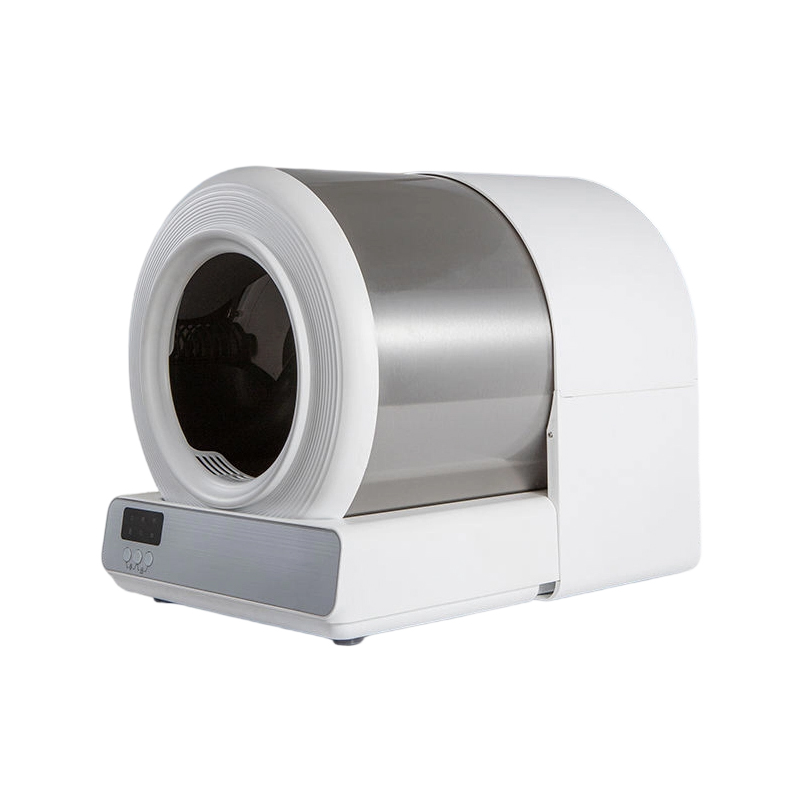
Cat Litter Tray For Multiple Cats Automatic Cat Litter Tray
Cat Litter Tray for Multiple Cats Automatic Cat Litter Tray – Product Features The high-pressure washable, safety-focused design facilitates compr...
View More -
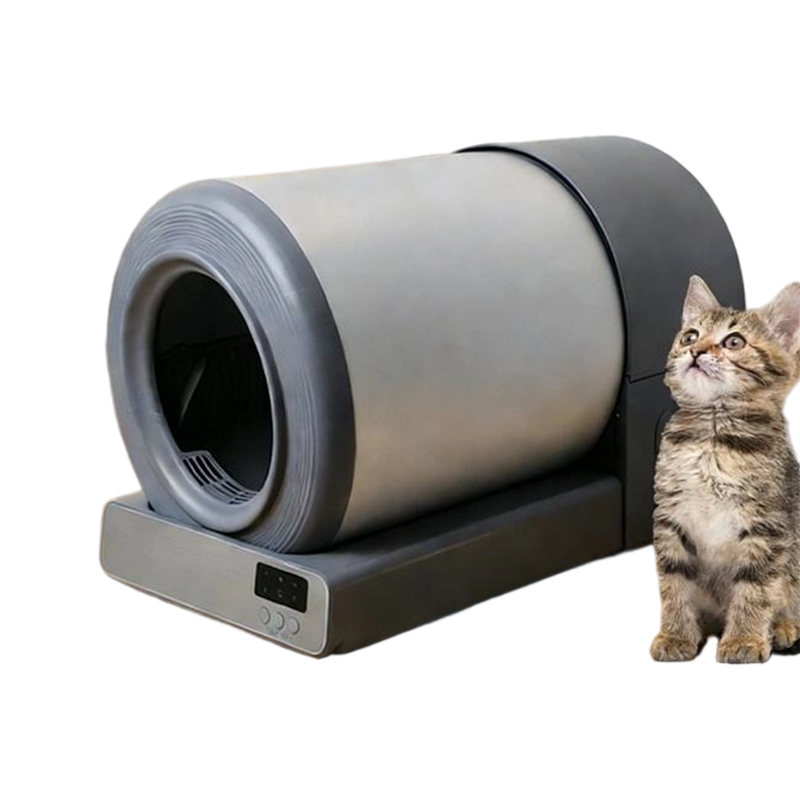
Self-Cleaning Stainless Steel Smart Cat Litter Tray
Self-Cleaning Stainless Steel Smart Cat Litter Tray – Product FeaturesThe preferred choice for non-profit organisations; compatible with open-top bi...
View More -
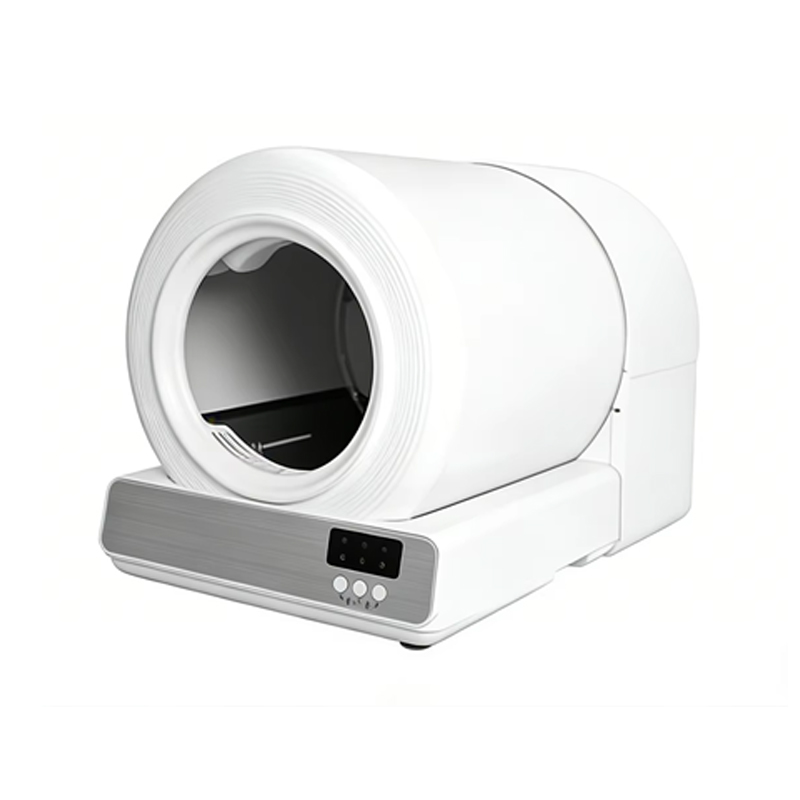
Second-Generation Fully Automatic Cat Litter Tray
Second-Generation Fully Automatic Cat Litter Tray – Product Features With a large 65-litre capacity, it easily accommodates a substantial amount of ...
View More -
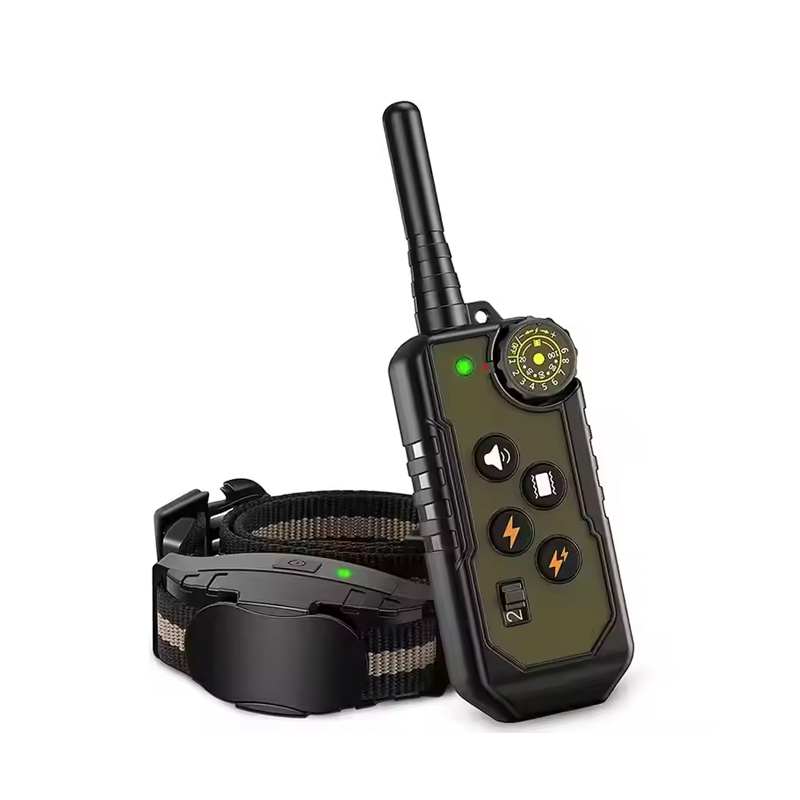
Multi-Mode Easy To Operate Training Shock Collar
The Multi-mode, easy-to-operate training Shock Collar is designed to provide a practical solution for owners seeking a safe and effective way to train...
View More -
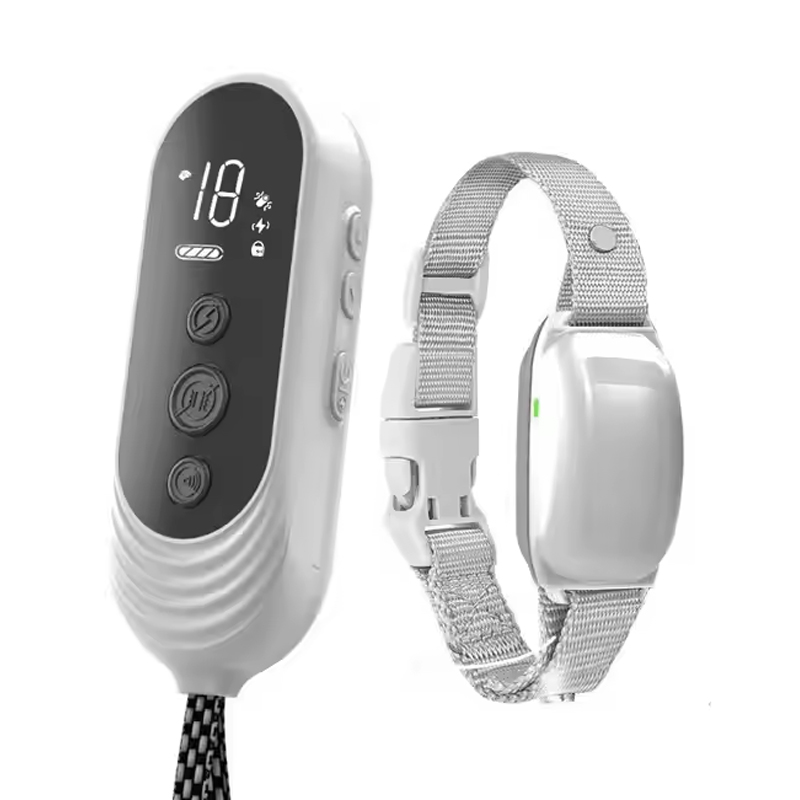
Waterproof Adjustable Polyester Training Shock Collar
The Waterproof Adjustable Polyester Training Shock Collar offers a reliable solution for pet owners seeking a versatile and durable collar to enhance ...
View More -
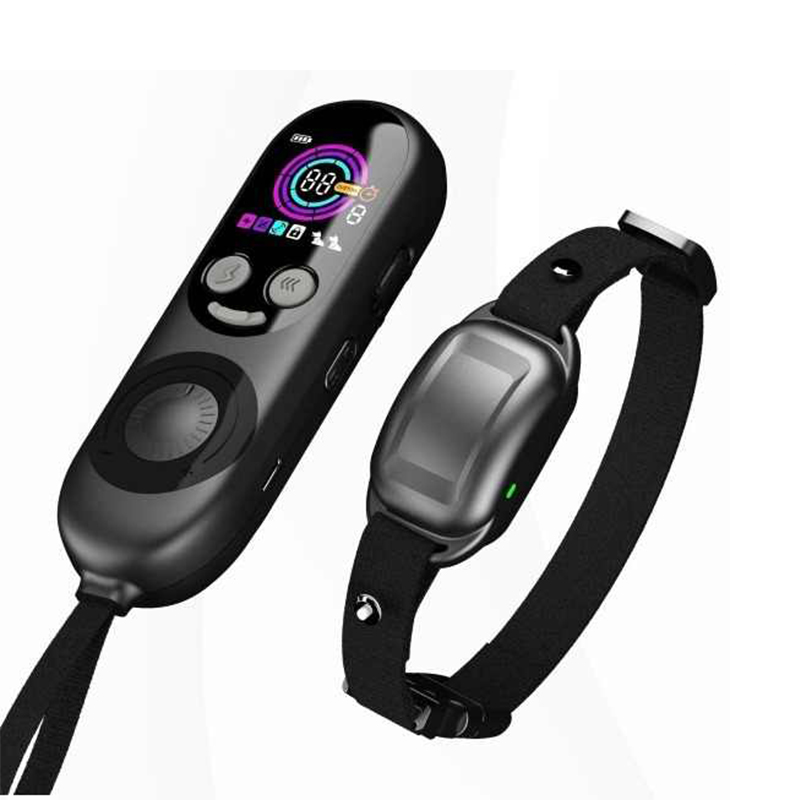
Display Remote Control Training Shock Collar
The Display Remote Control Training Shock Collar is designed to provide pet owners with a reliable and humane solution for training their dogs. Whethe...
View More -
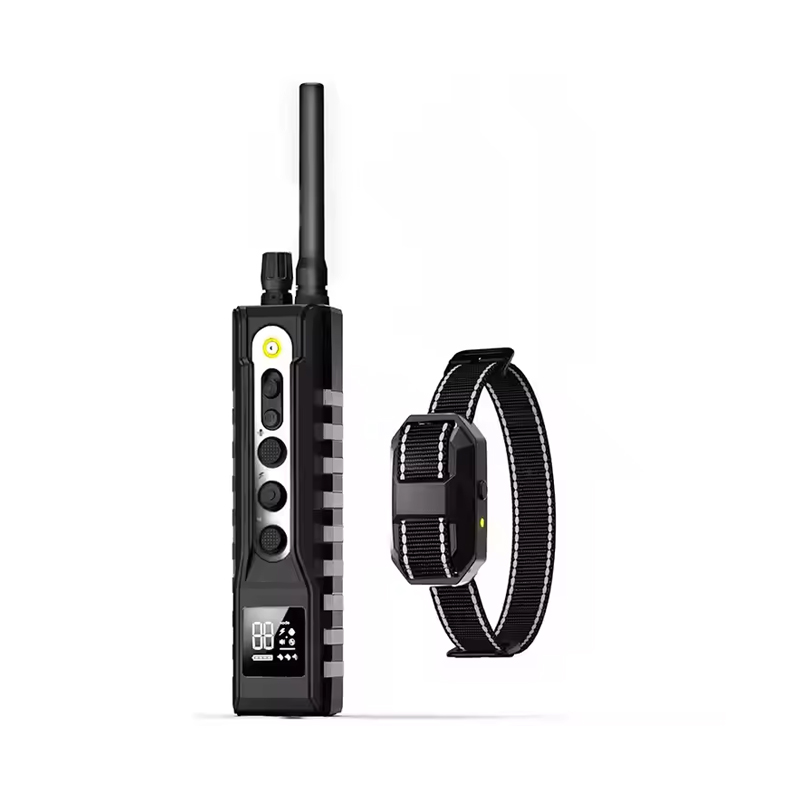
Multi-Function Long Distancetraining Shock Collar
The Multi-function Long Distance Training Shock Collar is a highly versatile tool designed to support your dog’s training across various environment...
View More -

Remote Control Waterproof Training Shock Collar
The Remote Control Waterproof Training Shock Collar is an advanced training tool designed to help pet owners effectively manage their dogs’ behavior...
View More
Pet Products
If you have any questions, please
get in touch with us.
+86-13486854214
E-mail: [email protected]
Address: No. 258, Qingchuan Road, Huzhen Town, Jinyun County, Lishui City, Zhejiang Province
Copyright © Zhejiang Beijing Technology Co., Ltd.

OEM/ODM Smart Pet Care Factory