
 EN
EN  English
 Español
 Français
 Deutsch
 Nederlands

- Type:
- Industry News
- Date:
- 2026-03-13

Industry News
Can an Intelligent Pet Food Dispenser Reduce Feeding Anxiety for Pets
Feeding time should feel calm. For many pets, it does not. Some pace in circles long before a bowl touches the floor. Others bark, scratch cabinets, or guard their food once it appears. In multi-pet homes, tension can rise fast. Owners often assume hunger is the only trigger. Behavior specialists suggest a wider view.
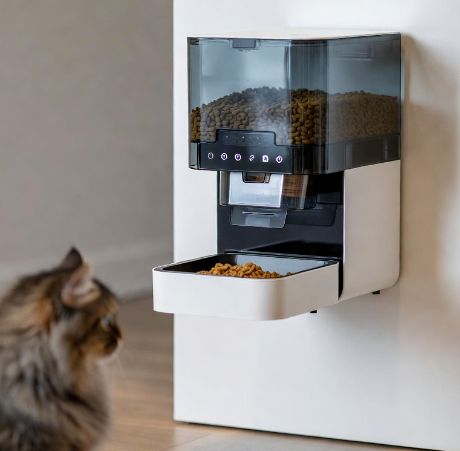
The growing use of intelligent pet food dispensers has sparked a new discussion in the pet care industry. Can automated feeding systems reduce anxiety linked to meals? Or do they simply change the routine without solving the emotional root?Manufacturers, veterinarians, and trainers are watching this shift closely. Retailers report steady interest in devices that promise structured feeding schedules and remote management. The question now moves beyond convenience. It focuses on emotional wellbeing.
Why Do Pets Experience Feeding Anxiety?
Feeding anxiety does not appear out of nowhere. It often builds through daily patterns.
Many pets rely on predictable routines. When meals arrive at irregular times, uncertainty develops. Animals that once competed for food may carry that tension into a new home. Rescue pets can show this strongly. Even animals raised in stable environments may feel stress if their schedule changes often.
Common triggers include:
- Inconsistent feeding times
- Sudden delays in meals
- Competition with other pets
- Owner absence during usual feeding periods
- Overexcitement tied to human cues
Dogs may react with vocal behavior or jumping. Cats may display pacing or intense staring. In some cases, rapid eating follows, which can lead to digestive discomfort. The emotional response becomes physical.Anxiety at meals can spill into other parts of the day. Some pets show clingy behavior. Others withdraw. The feeding moment becomes a daily stress event.
How Does an Intelligent Pet Food Dispenser Change Routine?
An pet food dispenser introduces structure. It releases meals at set times without relying on human presence. For pets that thrive on predictability, this consistency can create a sense of stability.The device separates the emotional build-up from human signals. Instead of watching an owner prepare food, the animal responds to a neutral mechanism. This shift may reduce anticipation behaviors triggered by visual cues.
The routine becomes simple. Food appears. The pet eats. The owner may not even be home.Several trainers note that removing dramatic pre-meal rituals can lower arousal levels. The absence of excited voices or hurried movements helps keep energy balanced. Calm repetition builds familiarity.Over time, some pets begin to wait quietly near feeding time rather than pacing or vocalizing. The system creates boundaries. Meals happen when scheduled, not when begging succeeds.
Can Scheduled Feeding Lower Emotional Arousal?
Scheduled feeding plays a central role in emotional regulation. Animals rely on patterns to feel secure. When meals arrive at consistent intervals, the body adjusts.Hormonal rhythms align with predictable timing. Anticipation remains, but it becomes manageable. The stress of uncertainty fades.
Consider the contrast:
| Feeding Style | Emotional Pattern | Possible Outcome |
|---|---|---|
| Random timing | Uncertainty | Heightened anxiety |
| Owner-triggered cues | High excitement | Overstimulation |
| Automated schedule | Stable expectation | Calmer response |
The table reflects general behavioral observations rather than fixed rules. Every pet reacts differently. Still, routine stands as a powerful influence.Owners often underestimate how strongly their own habits shape feeding emotion. If meals sometimes come early and sometimes late, confusion grows. An automated system removes that variability.Pets begin to trust the rhythm. Trust reduces stress.
Does Portion Control Influence Anxiety Levels?
Overeating and underfeeding both affect mood. When portions vary, pets may rush through meals, unsure if food will last. Rapid consumption can create discomfort, which feeds back into anxiety.Intelligent dispensers typically release controlled amounts. This supports steady intake. The pet learns that each meal follows a pattern. No surprise increases. No sudden reductions.Controlled portions may also slow eating. Some devices distribute food gradually rather than all at once. This pacing encourages a calmer experience.Weight management is often discussed in connection with automated feeding. Emotional balance deserves equal attention. Physical stability and emotional regulation often move together.
What About Multi-Pet Households?
Homes with multiple animals face unique challenges. Competition over bowls can trigger guarding behavior. One pet may eat quickly to avoid losing food. Another may withdraw.Separate intelligent dispensers can help divide resources. When each pet receives meals independently, tension decreases. The feeding moment becomes private rather than competitive.Owners report fewer conflicts when animals are not clustered around a single bowl. The environment feels more orderly. The absence of rivalry reduces defensive behavior.Still, placement matters. Dispensers should sit in areas that allow space. Visual barriers can also reduce stress in sensitive animals.Automation alone does not remove social dynamics. It creates structure that supports calmer interaction.
Can Remote Monitoring Reassure Owners and Pets?
Modern intelligent feeders often connect to mobile applications. Owners can adjust schedules without being present. While the technical side attracts attention, the emotional impact may matter more.When guardians feel confident that feeding happens on time, they project less stress. Animals sense emotional states. A calm owner contributes to a calm pet.Remote access also prevents sudden delays caused by traffic, meetings, or unexpected changes. Consistency remains intact even when life becomes unpredictable.Some devices allow voice recordings. Opinions vary on their impact. For certain pets, hearing a familiar tone may provide comfort. For others, it can increase excitement. Careful observation helps determine what works.Technology offers flexibility. Thoughtful use makes the difference.
Are There Situations Where Automation May Not Help?
Not every case of feeding anxiety stems from timing issues. Some pets carry deeper emotional patterns related to past experiences. Trauma, medical conditions, or separation distress can influence behavior.In such cases, a feeder alone may not resolve the root cause. Professional guidance may be necessary. Behavioral training often complements structured feeding.It is also possible for a pet to become anxious about the device itself. New sounds or movements may cause hesitation at first. Gradual introduction helps. Placing the feeder near the usual bowl location can ease transition.Owners should monitor changes closely. Signs of improvement include reduced pacing, calmer body language, and steady eating speed. Signs of concern include avoidance or new stress signals.Automation supports routine. It does not replace attentive care.
How Does Feeding Ritual Shape Emotional Memory?
Meals create daily emotional markers. The tone set at feeding time influences memory patterns. When excitement becomes intense, the body associates food with adrenaline. When routine remains calm, food links with security.An intelligent pet food dispenser shifts the ritual. It removes dramatic buildup. It limits unpredictable variation. The result can reshape emotional memory over weeks or months.Behavior change rarely happens overnight. Gradual adjustment defines most progress. Consistency forms the foundation.Owners who pair automation with calm daily interaction often observe broader behavioral balance. Pets that once reacted strongly at feeding time may show steadier behavior in other contexts as well.The device acts as one piece within a larger emotional system.
Is the Industry Seeing a Broader Shift Toward Emotional Wellness?
The pet care sector increasingly addresses mental health alongside physical needs. Enrichment toys, calming aids, and structured routines now share shelf space with traditional supplies. Intelligent feeding systems fit into this movement.Retail feedback suggests that buyers no longer focus only on convenience. They ask how devices affect behavior. They want solutions that align with animal wellbeing.Veterinary professionals often emphasize that predictability supports emotional stability. Automated feeding represents one practical method of creating that predictability.The discussion continues. Research evolves. Household experiences vary.What remains clear is that feeding time carries emotional weight. When managed thoughtfully, it can become a stabilizing anchor rather than a daily stress trigger.In homes where anxiety surrounds meals, structured automation offers a tool worth considering. Its effect depends on context, environment, and individual temperament. Observant owners remain essential.The quiet release of food at a set hour may seem simple. For some pets, that simplicity changes everything.
Related Products
-
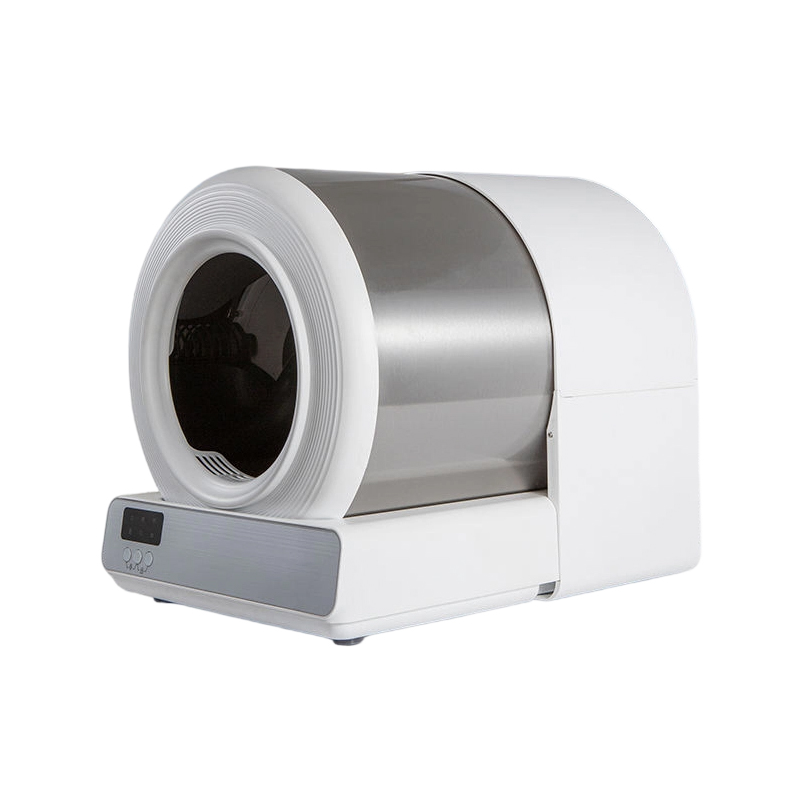
Cat Litter Tray For Multiple Cats Automatic Cat Litter Tray
Cat Litter Tray for Multiple Cats Automatic Cat Litter Tray – Product Features The high-pressure washable, safety-focused design facilitates compr...
View More -
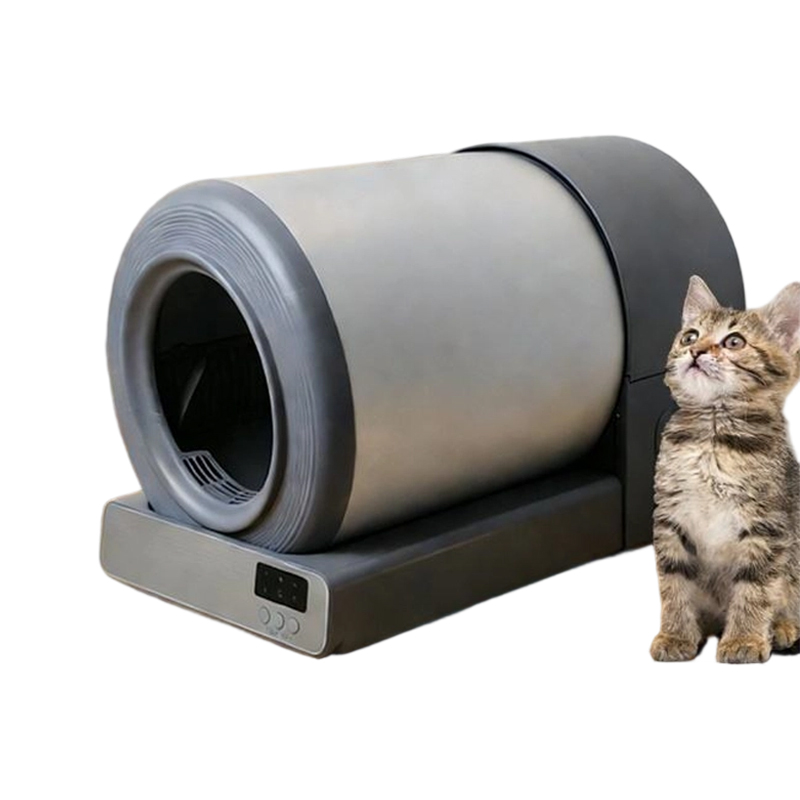
Self-Cleaning Stainless Steel Smart Cat Litter Tray
Self-Cleaning Stainless Steel Smart Cat Litter Tray – Product FeaturesThe preferred choice for non-profit organisations; compatible with open-top bi...
View More -
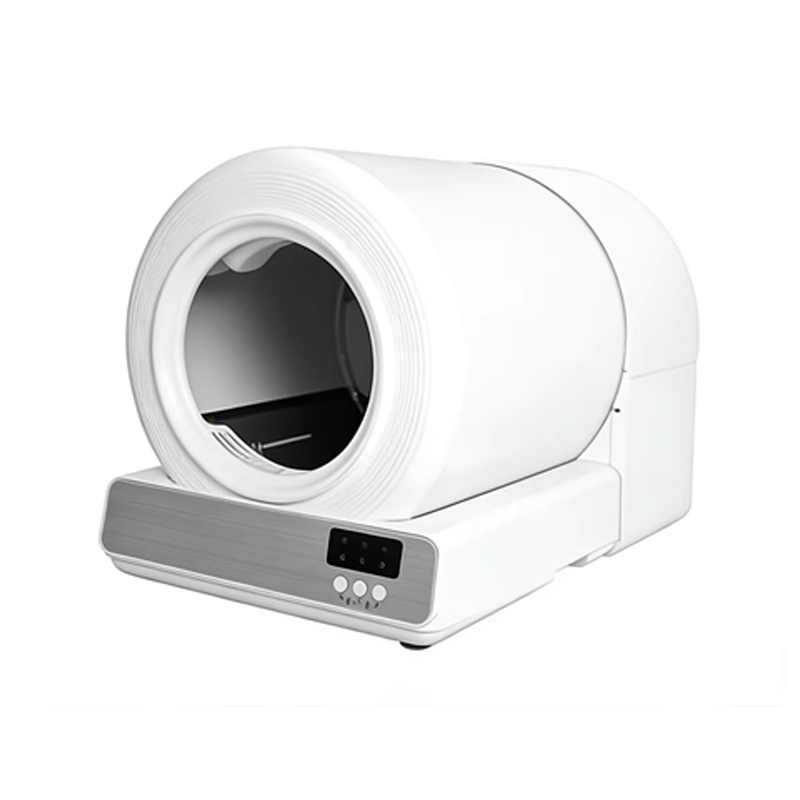
Second-Generation Fully Automatic Cat Litter Tray
Second-Generation Fully Automatic Cat Litter Tray – Product Features With a large 65-litre capacity, it easily accommodates a substantial amount of ...
View More -
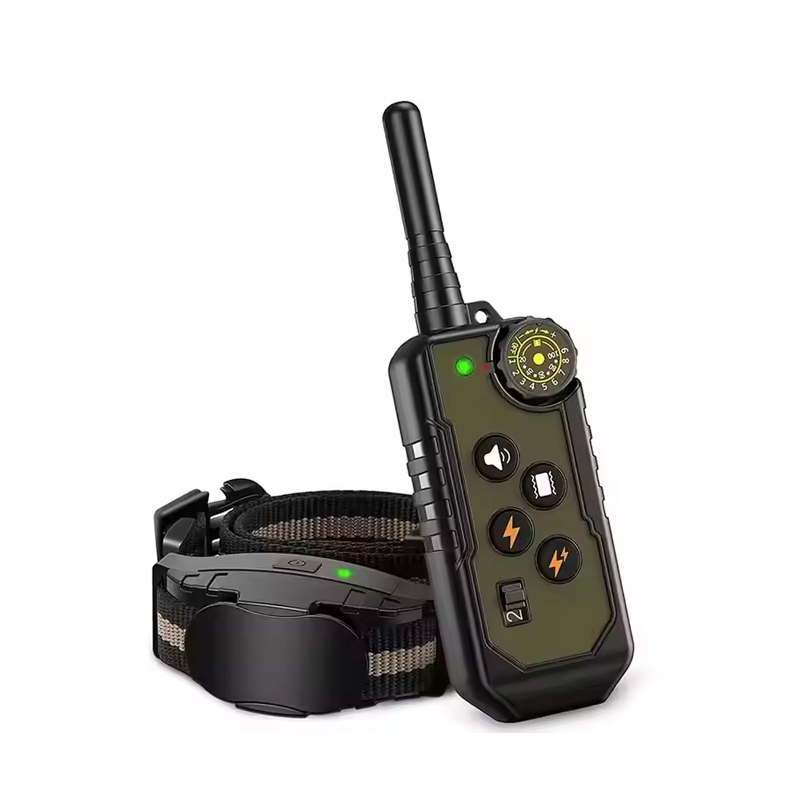
Multi-Mode Easy To Operate Training Shock Collar
The Multi-mode, easy-to-operate training Shock Collar is designed to provide a practical solution for owners seeking a safe and effective way to train...
View More -
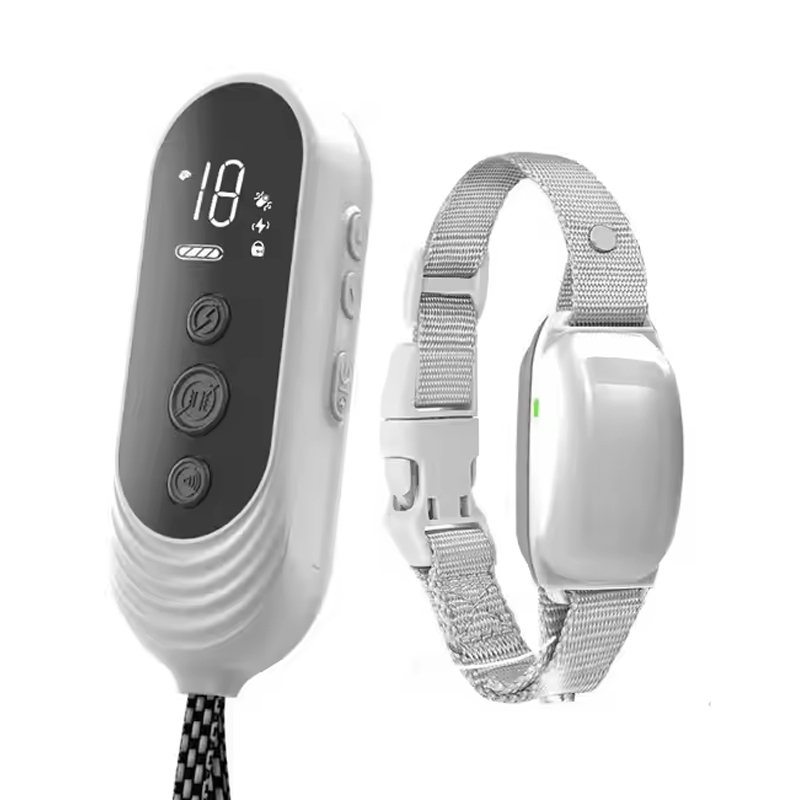
Waterproof Adjustable Polyester Training Shock Collar
The Waterproof Adjustable Polyester Training Shock Collar offers a reliable solution for pet owners seeking a versatile and durable collar to enhance ...
View More -
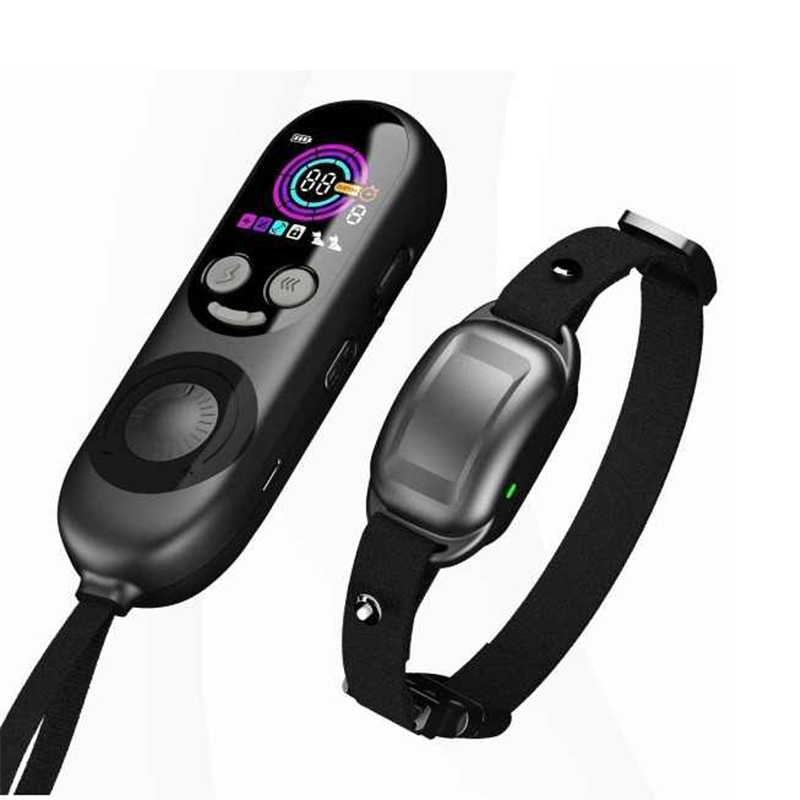
Display Remote Control Training Shock Collar
The Display Remote Control Training Shock Collar is designed to provide pet owners with a reliable and humane solution for training their dogs. Whethe...
View More -
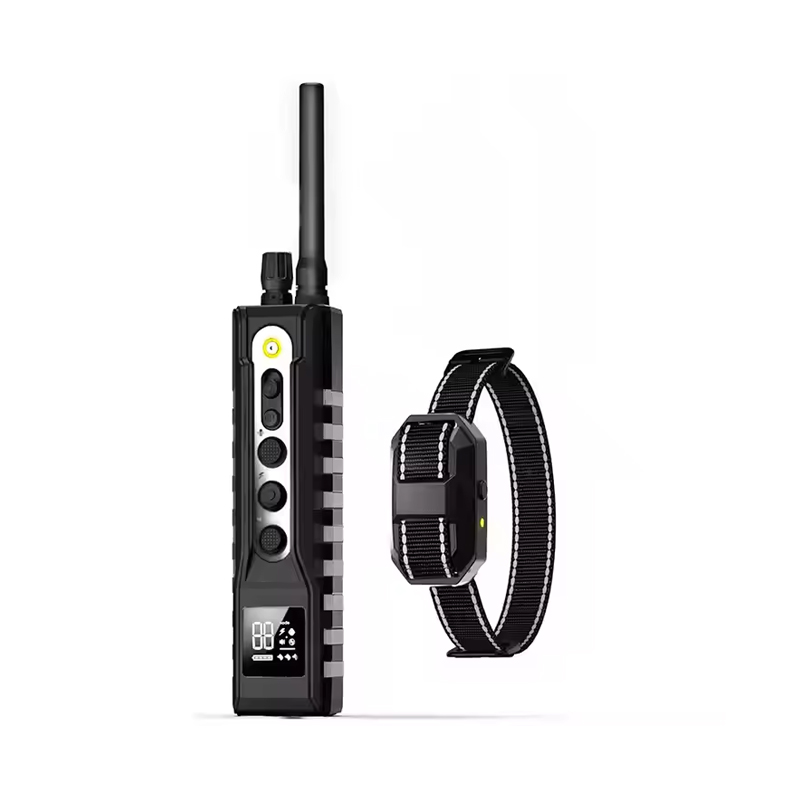
Multi-Function Long Distancetraining Shock Collar
The Multi-function Long Distance Training Shock Collar is a highly versatile tool designed to support your dog’s training across various environment...
View More -
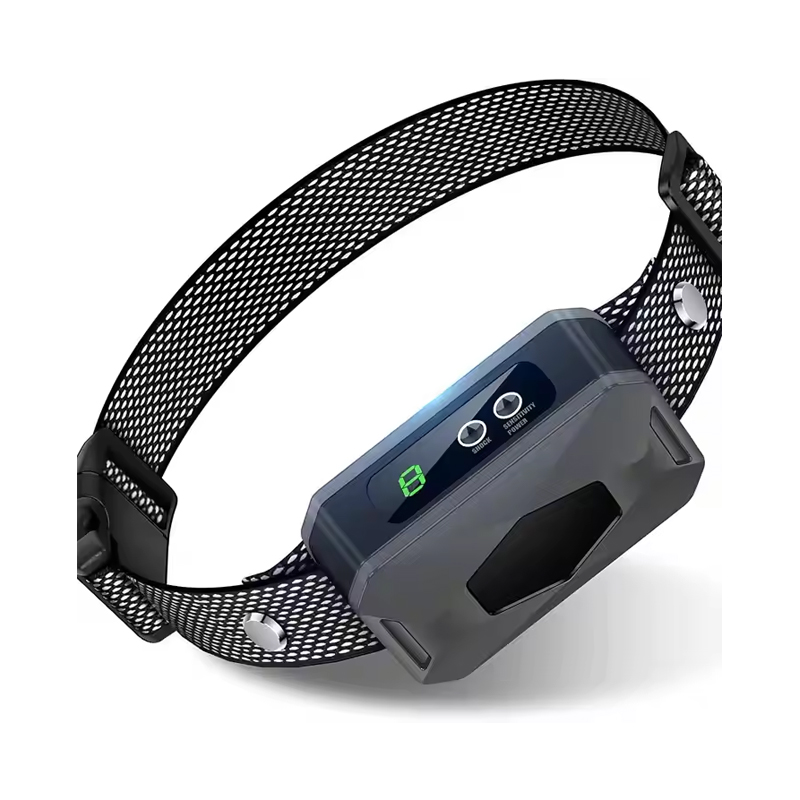
Remote Control Waterproof Training Shock Collar
The Remote Control Waterproof Training Shock Collar is an advanced training tool designed to help pet owners effectively manage their dogs’ behavior...
View More
Pet Products
If you have any questions, please
get in touch with us.
+86-13486854214
E-mail: [email protected]
Address: No. 258, Qingchuan Road, Huzhen Town, Jinyun County, Lishui City, Zhejiang Province
Copyright © Zhejiang Beijing Technology Co., Ltd.

OEM/ODM Smart Pet Care Factory